This year's Trooping the Colour event heralds a new era, marked by significant milestones and noteworthy changes. It signifies a momentous occasion as it is the first time in nearly four decades since a sovereign has participated in the parade on horseback, bringing back a cherished tradition.
The presence of Queen Camilla and the Princess of Wales as royal colonels adds a fresh and historical significance to the event, as they attend Trooping the Color for the very first time. This confluence of events signifies a dynamic shift and breathes new life into this time-honored ceremony.
Marking King Charles the 3rd's first Trooping the Color as sovereign, the event showcased the remarkable drill and precision of 1,400 soldiers from the Household Division, 400 Bandsmen and 200 horses from the Household Cavalry, starring with their elegance and grace. The occasion was a true spectacle, embodying the rich traditions and regal splendour that have become synonymous with this iconic event.
King Charles, led the procession on horseback, accompanied by his son Prince William the Prince of Wales. Joining them were King Charles III's sister, Princess Anne, known as the Princess Royal, and brother Prince Edward. Together, they formed an illustrious and regal equestrian group, adding a touch of familial connection and tradition to the spectacle of the event. Their presence further enhanced the significance and grandeur of the momentous occasion
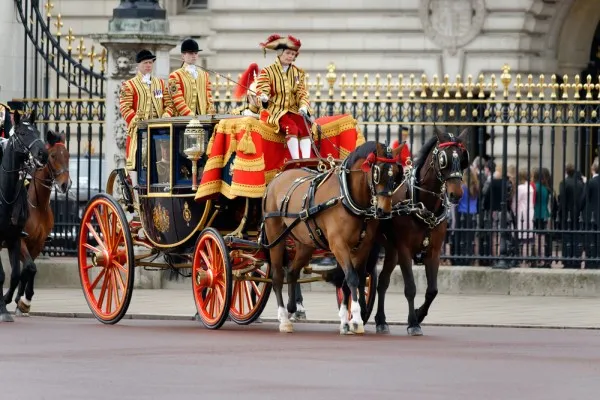
In a gracefully adorned carriage, Queen Camilla took her place, elegantly wearing a fascinator hat reminiscent of a bearskin. Camilla, who assumed the role of colonel of the Grenadier Guards earlier this year, made a striking appearance in a red military-inspired ensemble, paying homage to the guards distinguished uniform.
In a gracefully adorned carriage, Queen Camilla took her place, elegantly wearing a fascinator hat reminiscent of a bearskin. Camilla, who assumed the role of colonel of the Grenadier Guards earlier this year, made a striking appearance in a red military-inspired ensemble, paying homage to the guards distinguished uniform. Their presence added a touch of warmth and family charm to the grandeur of the event, creating cherished memories for all who witnessed the spectacle.
Courtesy of youtube.com/@royalchannel
William took up the position of colonel of the Welsh Guards, stepping into his role as the Prince of Wales. It was in this capacity that he led the parade, as the Welsh Guards were chosen to ceremoniously 'troop the colour'.
The name 'Trooping the Colour' has its roots in the historical military practice of 'trooping' the regimental colors. These colors, or flags, served as a rallying point for soldiers during battles. In modern times, the trooping aspect of the event involves the ceremonial march past the monarch, where the colors of the regiments are displayed, allowing them to be recognised and honored.
This year's flypast was a truly remarkable spectacle, surpassing expectations with the participation of 70 aircraft on Saturday.
Among the impressive lineup were iconic Spitfire and Hurricane fighters from the Battle of Britain Memorial Flight, evoking a sense of nostalgia and paying tribute to Britain's rich aviation history. The enhanced display brought renewed excitement to the royal celebrations, making a triumphant return after being scaled down during the King's coronation in May due to adverse weather conditions. Notably, the flypast included a captivating formation of 18 Typhoon jets, expertly arranged to spell out the initials 'CR' - an abbreviation of 'Charles Rex' in Latin, which translates to 'king'.